
#163 Notes from the paese
Buone feste

When you come to Sicily, you’ll realise there is something special about this time of year on the island.
The small villages, like my little paese in the Nebrodi mountains, are part of a cooperative of ancient places that have been around for many centuries.
Each town has its own personality and story as they dot around the mountainscape. From the highest the borgo più alto della Sicilia Floresta within the Nebrodi National Park to other places like San Fratello, Mistretta, Cesarò, Galati Mamertino, San Marco D’Alunzio, Alcara Li Fusi, Brolo, Naso, Capo d’Orlando, Sant Agata Millitello, Capri Leone, Castell’Umberto, Tortorici, FIcarra, Frazzano, Gioiosa Marea, Longi, Mirto, Montagnareale, Montalbano Elicona, Patti, Piraino, Raccuja, San Salvatore di Fitalia, Sant’ Angelo di Brolo, San Piero Patti, Sinagra, Torrenova, Ucria, Acquedolci, Capizzi,Caronia, Militello Rosmarino, Santa Domenica Vittoria, Santo Stefano di Camastra, San Teodoro, Bronte, Randazzo, Maniace, Cerami, Troina.
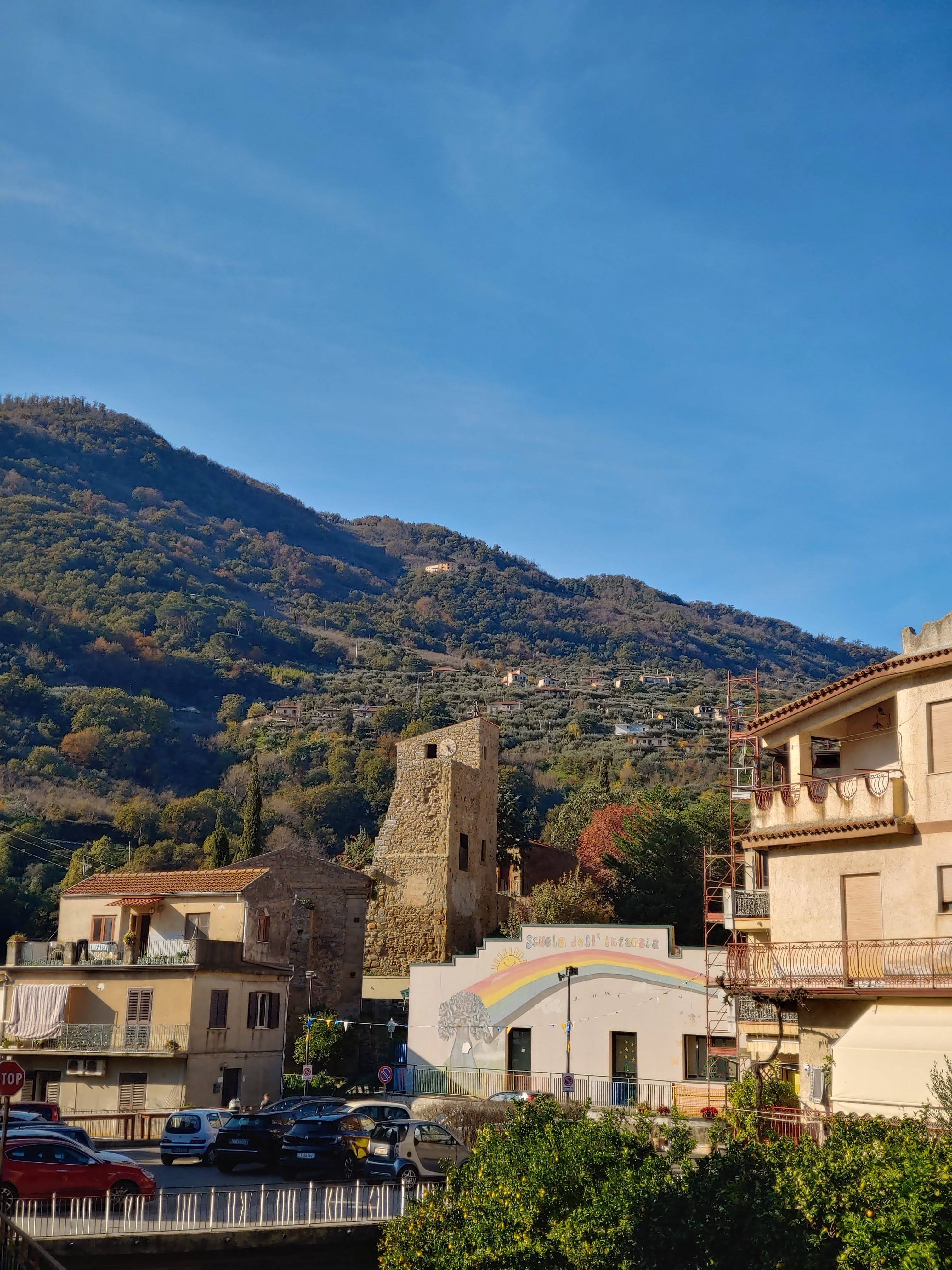
In all, there are twenty-four towns sprawled across the territory of the Nebrodi mountains, some perched in the mountains, others in the nooks of hidden valleys in the uneven landscape, and some liberally dotted along the coast within this hidden and often neglected part of the island.
The Nebrodi is a lush area filled with coniferous forests, hazelnut, chestnut, acorn, and olive groves, all set amid a deep-seated legacy of abandoned agriculture. It’s sad to see abandoned plantations of oranges and lemons taken over by bramble bushes. Where there once were endless gardens and cultivated plants, today it is slowly being taken over by the wilderness. It’s a beautiful part of Sicily, but its reckless abandonment is sad to witness.
Many of the smaller villages are slowly dying out, especially after the Covid pandemic, so many more people have left to find work elsewhere. There are so many Sicilians in the north of Italy, in other parts of Europe, America and Australia.
Nonetheless, despite the outflow of people, these tiny villages still hold onto their lifestyle, traditions, and way of life.
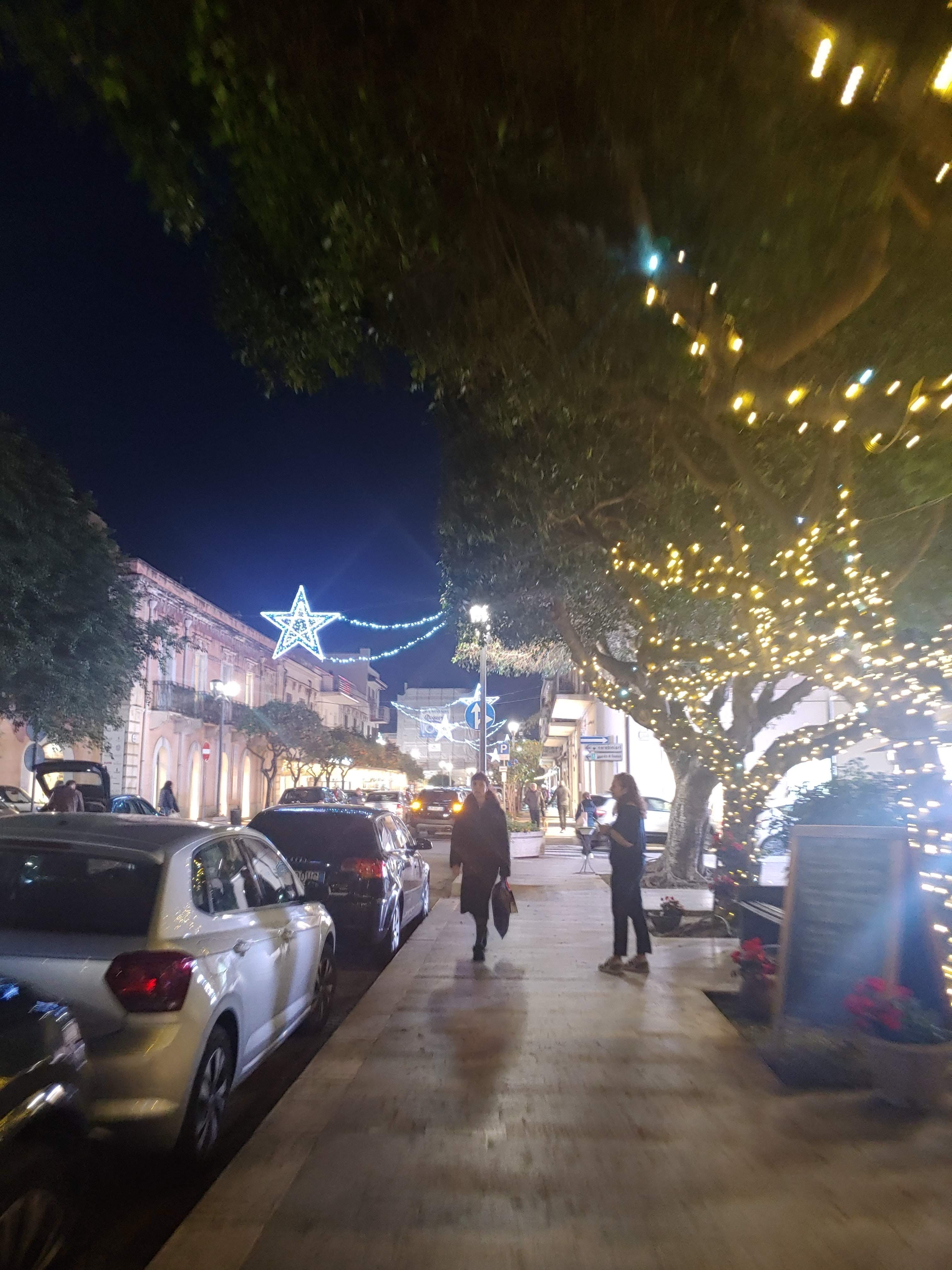
For the festive season, a Sicilian village will easily put on its traditional garb and slip back into another time. I love this time of year in Sicily because it reflects elements from past epochs. The island is drenched in history.
The many centuries of invasions and invaders and dominations have left behind their footprints on the lifestyle and culture of Sicily. It is easy to witness the shadows cast by the ghosts and recollections of the rich and heavy history as they are proudly acted out every year in seasonal and annual celebrations such as Christmas.
Spending time in Sicily and Italy over Christmas and the New Year, you will witness religious, secular and pagan celebrations all combined.
The celebration starts with the feast of the Immaculate Conception on the 8th of December, when schoolchildren get a holiday in honour of the conception of Mary the mother of Jesus. Many cities have the virgin Mary as their patron Saint and protector so this celebration in her honour is quite important in Italy. In fact, every town or city will have its own patron Saint and dedicate particular celebrations throughout the year to its saintly protector. Even though Saint Francis of Assisi and Saint Catherine of Siena are the official national patrons, the Virgin Mary’s devotion in Italy makes her a spiritual and cultural pillar, functioning as a powerful and unofficial patron of the Italian people.
The Immacolata signals the beginning of the festive season, and it’s considered to be the correct day to put up your Christmas decorations.
Then comes the feast of Saint Lucy on the 13th of December. A native of Sicily, Santa Lucia is a very important Sicilian Saint. The cucia, a rice-based sweet, is being prepared today to commemorate how the saint saved Palermo from famine by sending a ship to the port filled with grain. Here in the province of Messina, our Cuccia di Santa Lucia is a savoury soup made from thirteen different grains and cereals. I usually make a batch, and we eat it throughout the week.
There are times when I find living in Italy very trying, to say the least, like when I have to wait in line at the post office forever, or when I navigate the baroque, long-winded education system, public service, or the rundown, broken health care system.
Then there are more subtle moments that make me stop and witness the more endearing side of life in Italy. For example, I live down the road from a medieval church. It’s a pleasure to walk down the historical centre of town past higgledy-piggledy succession of buildings, from newly restored white washed and exposed stone finished for sides to decaying abandoned houses filled with pigeons stray cats and rodents. To elegant palazzi from bygone days of the thriving Sicilian aristocracy of barons and barrenness’s Dukes and Duchess’s aristocratic families who have either died out or moved away, leaving behind their palaces and ghosts.
Often religious processions walk past my front door with the pageantry of these ancient traditions. Sometimes I’ll forget it’s Santa Lucia, the Annunziata, or any other saint day celebration. That is, until I hear the parish priest’s diatribe of prayers over his megaphone, with the people all lined up behind him and responding in kind with an amen, a Hail Mary, or an Our Father, according to the arbitrary prayers of the rosary.
Sometimes I’ll be having a coffee in my kitchen, and then I’ll jump out of my skin as the local brass band enthusiastically blasts out a tune through my front window whose shutters look out directly over onto the road.
The band's emphatic and energetic playing highlights the upcoming procession.
I often sneakily peek through the shutters and see the slightly dishevelled band members, made up of students from the local music school, with shirts untucked, loose ties, and jackets that don’t quite fit.
These days before Christmas, there are the Novena masses, early morning and evening services celebrated each day for the nine days before Christmas. Each celebration is filled with music and Christmas carols.
Lying in my bed I’ve been woken up by a dedicated amateur band of players making their way to the Church of the Convent at the end of my street at a roundabout 6 am.
It is still dark on these early-morning winter days, so I am unwilling to get up to go to the Service, but it gives me immense pleasure to hear the instruments playing as they walk by my house. I can hear a clarinet, a piano accordion, a trumpet, a tambourine, a guitar and some other brass or woodwind. I’m not quite sure if it’s a saxophone, a trumpet, or both playing.
They aren’t professional musician’s at times they are slightly out of tune, not quite in unison but it’s the sentiment that counts!
One morning, they were playing Silent Night, and another time, White Christmas, and other now-universal Christmas carols. There isn’t any carolling going on here, but there is something special about hearing their music echo through these ancient streets. It’s a timeless tradition that all Sicilian fathers, mothers, grandparents, and great-grandparents have acted out.
I smiled to myself as I realised this is an experience you will only see in these small towns. I’m reminded of how charming Sicily can be at certain times.
So buone feste to you from me in Sicily.
That’s all I have on my mind for now.
Thanks for reading along.
Stay well, be kind to everyone, including yourself, and we’ll speak again soon.
Rochelle
Every once in a while, I talk about Sicily.
Other times, I talk about whatever is on my mind.
My writing is always about lightning, the mental load, and sharing my thoughts and ideas.
Please share this post with someone you think might enjoy it.
N.B.: All images are created via Canva. This post was edited with Grammarly.
Buon natale! 💫